




It’s time to share the story of our yachting adventure in Brazil. We set sail from Marina Farol de Paraty, located just a few kilometers from the historic center of Paraty. The marina can accommodate over 300 yachts and motorboats, offering water, electricity, showers, parking, and 24/7 security. Reaching the marina from the city center takes only 15 minutes by taxi.
Checking in the Yacht The first thing to keep in mind when renting a yacht in Brazil is the security deposit. Insurance with a deductible is not available here, so the charter company holds the deposit on a credit card. We strongly recommend authorizing the deposit at least 48 hours prior to check-in. Banks are practically closed on Saturdays, and international transactions in Brazil do not always go through on the first attempt—a challenge we experienced firsthand. The company does not accept cash for deposits.
During the handoff, only one staff member spoke English. If you don’t speak Portuguese, be prepared to wait a bit for your turn. There is no comfortable waiting area at the marina, so it’s best to arrive no earlier than an hour before check-in. Fortunately, our boats were ready ahead of schedule. On-site, there is a good restaurant called Armazém Mar. However, it was closed for a private wedding on the day we arrived, so after a long journey, we dined right on board and turned in for the night.
Provisioning It is best to do your main grocery shopping in advance at the large CARLAO supermarket. The marina itself has only a small store selling essentials: water, snacks, toiletries, and minor items.
First Leg — Praia do Pouso In the morning, we set sail for Praia do Pouso, one of the nearest anchorages featuring a beautiful sandy beach. It is a fantastic spot for a first swim. It’s best to arrive before 10:00 AM, after which tour boats begin arriving to drop off tourists for 30–40 minutes before moving on. In the bay, you can have breakfast, swim, and take a short walk along the shore. The water here has an unusual tint; the bottom is rich in silt and clay, making it look slightly murky. This is a natural characteristic of the area rather than an indicator of water quality. We anchored here overnight. On shore, there is a restaurant equipped with Starlink, but you shouldn’t rely on mobile coverage—it is virtually non-existent in many bays, making a personal Starlink Mini an invaluable travel companion. If you walk through the small thickets behind the beach, you can reach another secluded, stunning spot. Not everyone in our crew made the trek, but those who did called it one of the most pleasant walks of the entire trip.
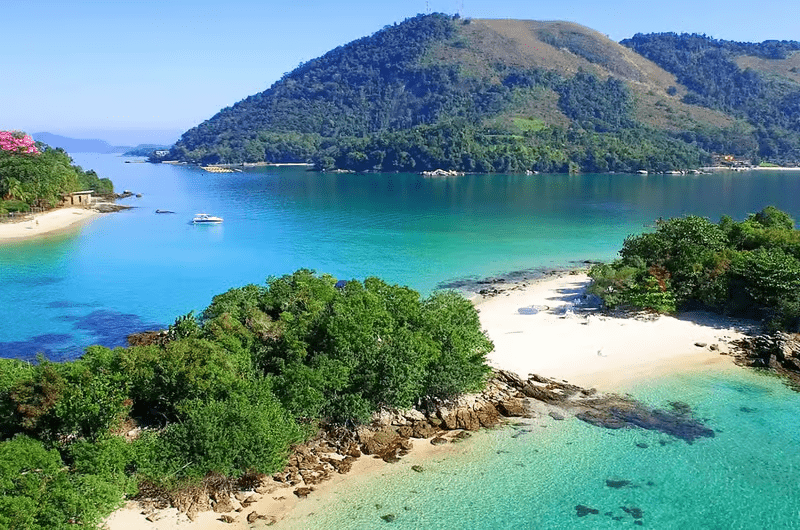
Ilha Grande — First Discoveries After resting at Praia do Pouso, we set out to explore the northern part of Ilha Grande. Our plan was to visit a small bay local sailors consider one of the most beautiful on the island. However, the wind was picking up, rolling swells into the bay, making it uncomfortable to stay. Locals refer to this area as the Brazilian fjord: dozens of lush green bays, islands, and straits create a truly unique landscape. The northern coastline is scenic, though there are few mandatory stopovers. The next beach on our itinerary was also exposed to swell. As light rain began to fall, we decided to push forward to a sheltered anchorage.
Overnight at Sítio Forte By sunset, we reached Sítio Forte, one of the most convenient anchorages on this side of Ilha Grande. The bay is well-sheltered from southerly winds, allowing for a peaceful night even if weather conditions shift. Locals mentioned we could top up our fresh water here, but our tanks were still full, so after a morning swim, we continued along our route. The shore proved highly photogenic—white sand, palm trees, and calm waters provided the perfect backdrop for a quick photo session.
Vila do Abraão A day later, we headed to the island’s main settlement, Vila do Abraão. Before entering, we were warned that locals were protesting a proposed 50-real tourist tax, which might cause docking difficulties. Having researched the situation beforehand, we knew there was no danger for sailors, though the atmosphere in the harbor was indeed unusual. The main challenge was the constant traffic of high-speed passenger taxis. Every few minutes, they would approach the pier, kicking up heavy wakes. Some even passed right alongside sailing yachts, intentionally intensifying the rocking. The charter company confirmed that some boat operators were expressing their discontent with the new regulations in this manner. Staying at the dock was so uncomfortable that we quickly moved to open mooring buoys in the eastern part of the bay, where conditions were significantly calmer.
Water Supplies and the First Real Town We went ashore using our dinghies. Vila do Abraão is a charming tourist town filled with dozens of cafes, restaurants, shops, and a waterfront promenade. We hoped to refill our fresh water tanks here, but were unable to do so. To continue our journey comfortably, we had to purchase nearly 200 liters of bottled water. After several rainy days, an unexpected issue arose—our clothes stopped drying altogether. We even used a local laundry service, though our clothes were returned late and still slightly damp. Fortunately, the sun came out the following day, resolving the problem naturally. Despite these minor logistical challenges, the town left a delightful impression. It’s an ideal spot to enjoy dinner, restock supplies, and briefly transition from an expedition mindset to a relaxing vacation.
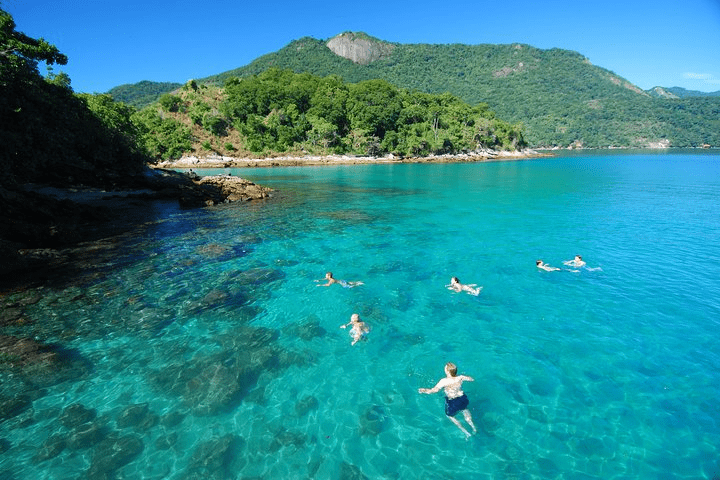
Saco do Céu — “Heaven’s Bay” Our next stop was Saco do Céu, which translates from Portuguese as “Bag of Sky,” though locals often call it “God’s Pocket.” It is one of the tranquil highlights of the entire route, offering glass-like waters, pristine shores, palm trees, and complete seclusion. On shore sits an excellent restaurant that somehow isn’t listed on Google Maps, complete with a small pool, a bar, and iconic water swings—one of the most photogenic spots of the trip. This was also where we finally refilled our fresh water supply: a hose fed by a mountain stream is attached to one of the buoys, allowing sailors to fill their tanks for free. After several days at sea, it felt like a true luxury. On top of that, they served us what was arguably the best Piña Colada of the trip—served in a fresh coconut with pineapple and rum, blended so thick that the straw could barely manage it.
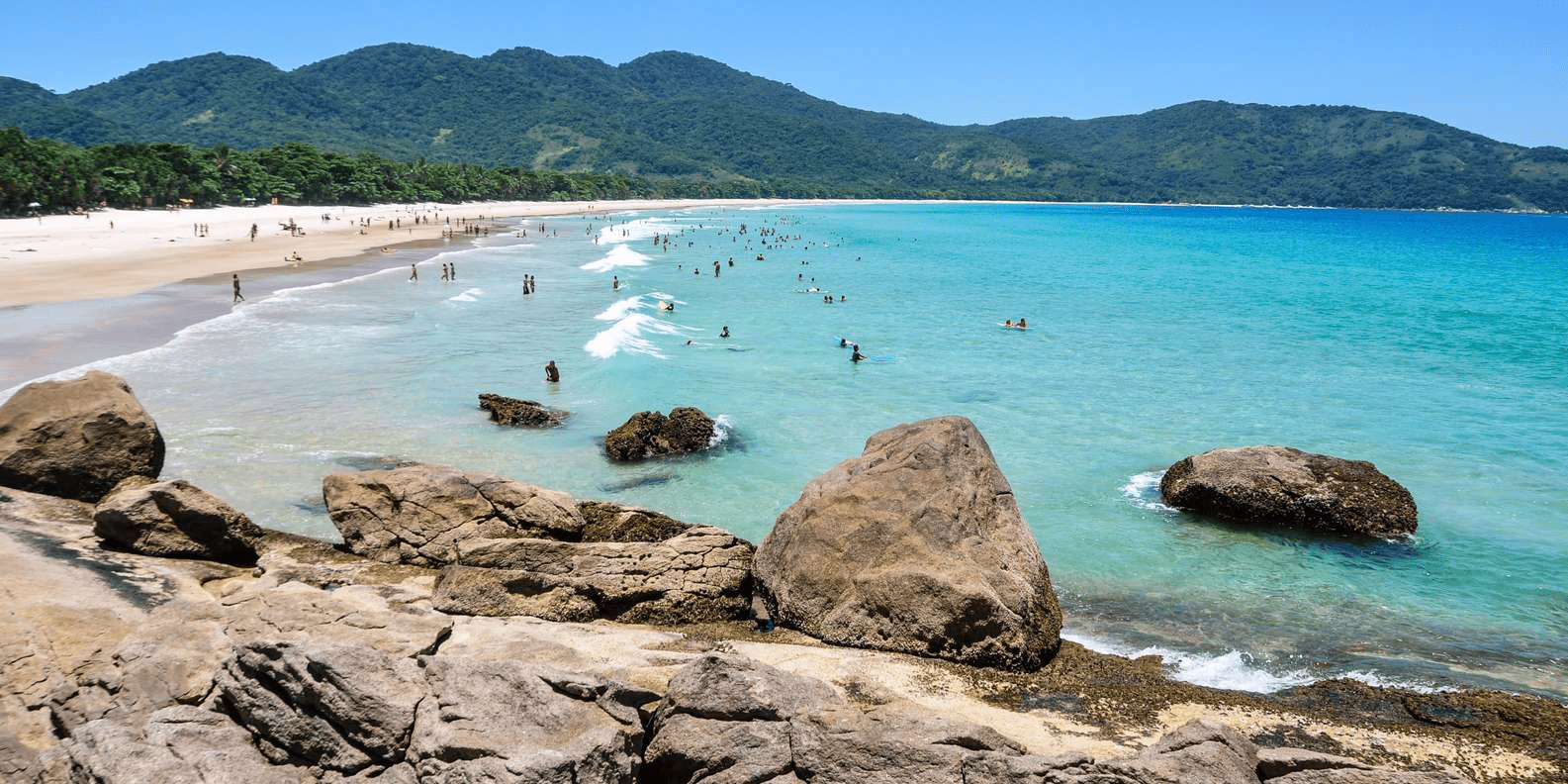
Lopes Mendes — A Beach Worth Travelling to Brazil For After lunch, we headed to Lopes Mendes. When arriving by yacht, it is best to anchor further east. Due to tides, the water level changes by nearly 1.5 meters, so pay close attention when mooring your dinghy—otherwise, you might lose it or find yourself hauling it across long stretches of sand. In the morning, the beach is virtually deserted, and the first boat of our fleet managed to land before tourists arrived. It was breathtaking: oceanic waves crashed onto the snow-white shore, massive granite boulders evoked the Seychellois landscape, and the beach seemed to stretch endlessly. We spent almost the entire day here. The trail crossing the neck from the anchorage to the ocean side takes about 20 minutes on foot over a small pass with a stream, so comfortable walking shoes are highly recommended. On the beach, we met a group of locals, played volleyball together, and were reminded once again how travel bridges cultures regardless of language. We returned to the boat just before sunset.
The Final Night Upon returning to our boat, we noticed that all other yachts had already left the bay. We decided to stay—a choice that turned out to be our only significant mistake of the trip. Overnight, the wind shifted, sending short, uncomfortable swells into the bay. The boat rolled constantly, making sleep difficult. The lesson was simple: always trust fresh weather forecasts alongside your intuition.
Return to Paraty At dawn, I raised anchor while the crew was still asleep, and we set course back to base. We had hoped to visit a few more scenic bays along the way, but with changing weather, we chose not to take risks and returned directly to Marina Farol de Paraty. Upon arrival, the marina’s service was impressive: staff members helped us dock, connected the water line, took away trash, and assisted with preparing the boat for check-out. After days of self-reliant sailing, such hospitality was deeply appreciated.
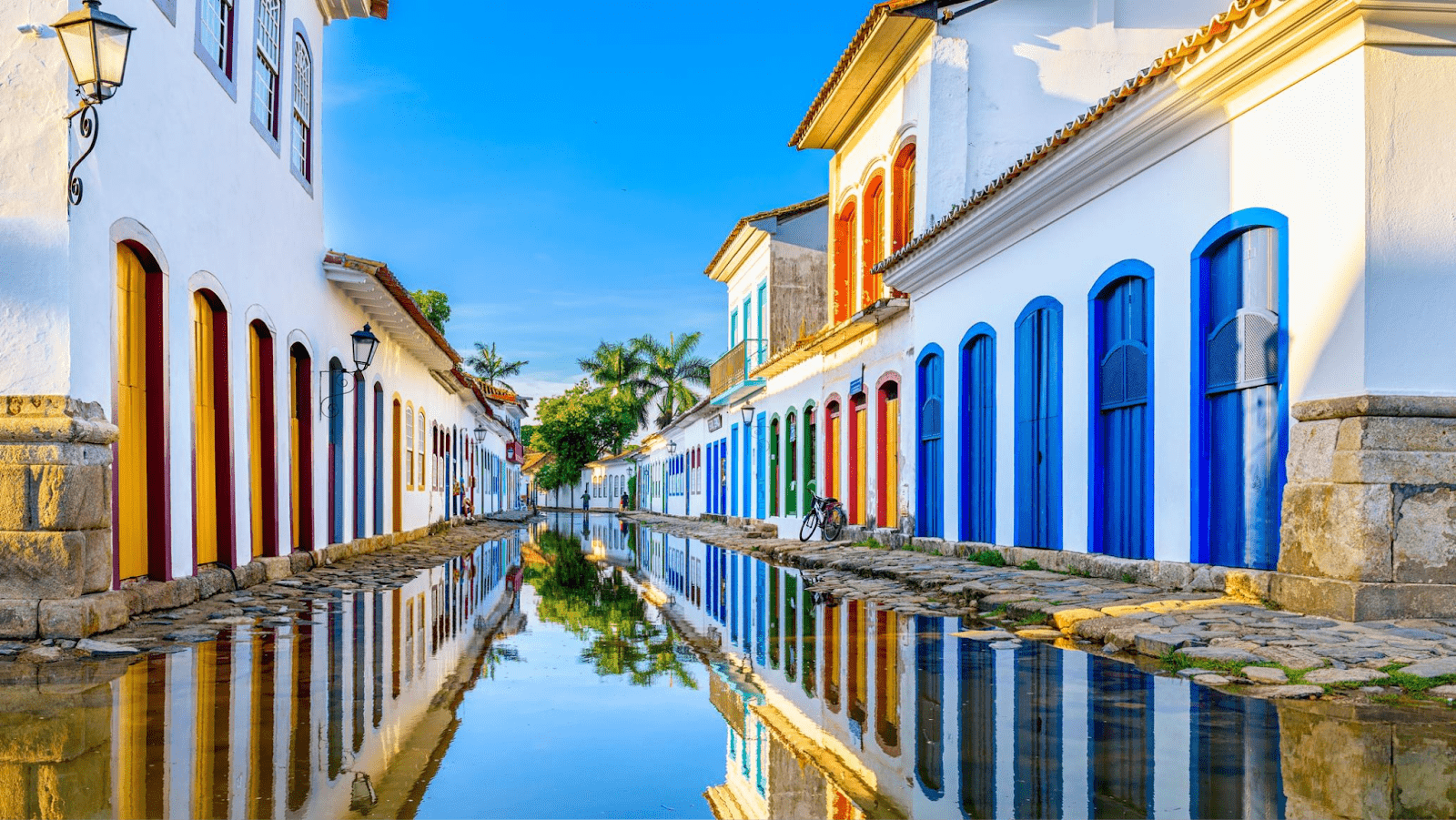
Paraty — A Colonial Seaside Fairytale We spent the remaining day wandering through the historic center of Paraty. Colonial architecture, vibrant doors and window frames, cobblestone streets, cozy cafes, and local shops create a unique charm. That evening, we wrapped up the expedition, presented first-time sailors with their logbooks, shared memories, and sat on deck late into the night recounting the highlight moments of the week.
A Few Tips for First-Timers
- Purchase a Starlink Mini or plan your internet access carefully; standard eSIMs do not work everywhere.
- It is most convenient to do your main grocery shopping in Paraty and Vila do Abraão.
- If you plan to fish, bring your own tackle—charter companies do not provide fishing gear.
- Under charter agreement terms, sailing into the open ocean on the outer side of Ilha Grande is strictly prohibited.
- Set aside a full day for Lopes Mendes—this beach was the highlight discovery of our entire trip.
Summary of the Expedition Brazil feels unlike the Mediterranean or the Caribbean. You won’t find full-service marinas every ten miles, but you will experience untouched nature, dozens of uninhabited islands, ocean beaches where you can spend an entire day in solitude, and the raw feeling of a true expedition. This route is not about luxury; it is about discovery and human connection. And that is precisely why we take to the sea!