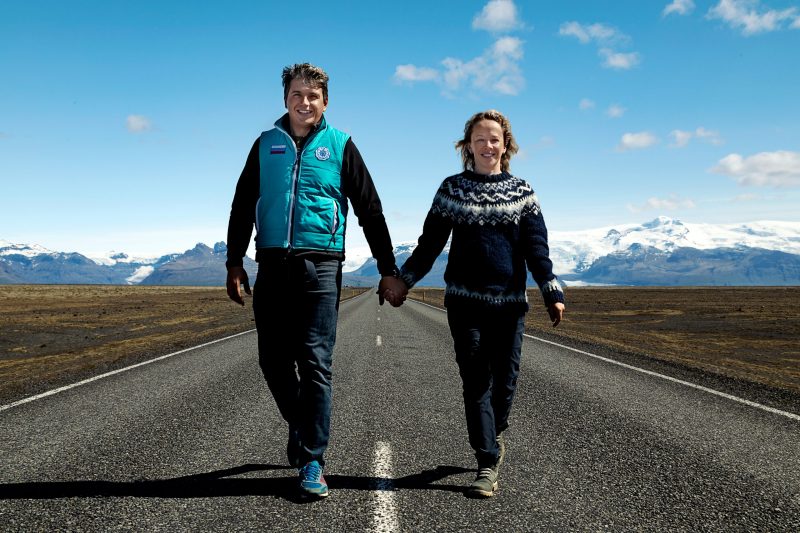
On Snob.ru, an interview with Nina Sinitsyna about how the Friendly Regatta appeared, what gives 10,000 hours of experience and what it is like to build a family startup.
Nina and Sergey have seen firsthand that the theory of ten thousand hours works. It takes about that much to become a professional, break firewood, understand where there is money in the business, and start making money. Nina and Sergey have been sailing for five years, now the Friendly Regatta includes expeditions, dive regattas, races, excursions and picnics, training for the skipper of the IYT international system, children's and adolescent yacht adventures with parents, organization of individual training and travel. The schedule is extensive: there are familiar Turkey, Italy, Montenegro, there are northern yachting in Iceland and Norway, there are Mexico and French Polynesia. The company’s first transatlantic transition will soon be completed.
.. How did you build your corporate career?
I'm an absolute self-made. Graduated from the Faculty of Economics of Moscow State University, worked for five years in the audit department of Ernst & Young. She then joined Adidas and became head of finance at the age of 26. She was both HR Director and Logistics Director. In parallel, she married and had two children. She worked in the company for ten years and left the position of vice president.
.. How did the Friendly Regatta come about?
Unlike me, my husband Sergey is not a corporate person. Although we worked together for a while, our romantic relationship began with a yachting trip down the Gulf of Thailand. It was there that I saw how he behaved in unusual conditions. Sergey had the courage to follow his dream, they came up with a friend, made several first successful events, but then there were disagreements on how to do business, and we bought his share. I consider myself a co-founder because I was providing basic finances at the time.
.. Why did you decide to leave and how did the yachting business become a family business?
Sergey began to succeed with the Friendly Regatta, he was often not at home. I remember sitting in the office at twelve in the morning thinking: I'm here all day, children with a nanny, a husband in the sea, and where are we, where is our family? The corporate issue was getting more and more stressful, and I caught myself thinking that I no longer wanted to go to work. The decision to divorce a loved one was difficult. Sergey supported me, did not drag me into his business, but said that it would be nice to work together. After leaving Adidas, I spent some time organizing children’s races and doing a clothing showroom in Moscow. So I got my first short business lessons there. But I quickly realized that it was impossible to have two startups in the same family. And since 2017, we have decided that Friendly Regatta is a family business and we work together.
.. What was the hardest thing in life after a stable job?
Although we had savings, we didn’t immediately shift from a high-sustainable salary lifestyle to the lifestyle of two startups: my daughter went to a private garden, there was a driver, a nanny, cars, plus we built a house. It took a couple of months to adapt to the new realities. For most of my career, I had a personal assistant who filmed a huge number of household questions, I didn’t even know how to put money on the phone. I had to accept that this was my new reality, with shares in Dixie, car sharing and paperwork. That was the amplitude on which I swung. It was hard to lose my identity. In the past, when people asked me who you are, I could say, Nina Sinitsyna, Vice President of Adidas. I remember how, pregnant with her third child, I came to the warehouse to pick up T-shirts for the regatta, and there I was met by a kind of woman Dunya in a bathtub and asked: who are you, honey? I say, I have a CEO husband, I want to take the shirts. She says, Well, my husband is the CEO, and who are you? It was such an experience.
.. How do you separate family life and work?
Entrepreneurship is not without mistakes. You have to be able to plant a straw. If these are money-related mistakes, it would be good to have a stability fund. For example, this year there were unforeseen expenses - a hotel had to be rented during a storm. To avoid mistakes related to people, before each regatta we meet with potential participants, talk about the values of the company, select crews. We openly discuss issues, but we never criticize each other or make claims.
.. What does the Friendly Regatta look like now?
The schedule is very busy, out of 52 weeks a year, 50 are busy for events. At first we did almost everything ourselves, now I am engaged in organizational work, marketing, on Sergey all the yacht expertise, routes, boats, captain training. We do strategy together.
.. What advice can you give to starters?
Startups are full of dangers at every turn. You can lose money, you can lose relationships with loved ones, you can lose status. But without it, the world won’t get an iPhone, a Tesla, a new restaurant or a quality service. Therefore, I believe that if there is a dream, it should be realized. There are some rules that I have developed. Don't take loans. Have a stable structure when the first five or at least two or three years the second person has a stable salary. It is difficult to talk about the stock, but you need to spend rationally. That is, to postpone at least a year, while the budget should be not only food, but also the cost of cars, insurance, updating clothes, gifts for birthdays.
I often hear that the main thing is to come up with a great product. Whatever the product is, it will not sell itself. You need to learn to understand marketing and sales, understand finance, HR, psychology, and most importantly, answer for yourself the question of why you need all this.
.. What did the company teach you and what did the startup teach you?
Corporate business has learned to formulate a strategy and work on it, create a mission and values. He gave a wide range of communication and communication. The ability to work hard is a hallmark of the corporate people of our generation.
Private business has taught us to see new opportunities in every situation, rather than a threat to a preconceived plan. Do not be afraid to lose everything and rise again, find and earn. This is an absolutely startup skill.
Source:https://snob.ru/entry/188219. Ivan Khoroshev talked. Journal material #3 (100) Winter 2019-2020